
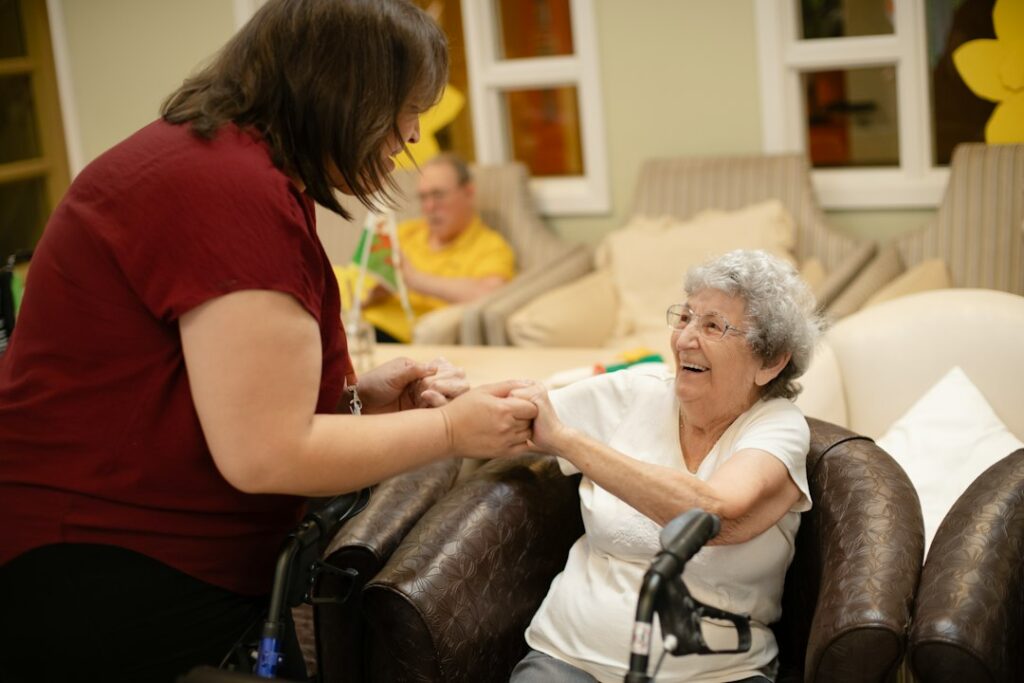
Moving into assisted living can bring relief, uncertainty, sadness, and even resistance at the same time. A senior may understand that the move is practical while still grieving a familiar home, daily routines, neighbors, pets, or a sense of independence.
Adjustment usually happens gradually. Families can help by treating the transition as an ongoing process rather than expecting comfort and confidence during the first few days.
How long does it take to adjust to assisted living?
Many seniors begin settling in within several weeks, but the timeline varies. Some feel comfortable quickly after meeting neighbors and learning the daily schedule. Others may need several months, especially if the move followed a health crisis, the loss of a spouse, or a sudden change in mobility.
A difficult first week does not necessarily mean assisted living is the wrong choice. Early reactions may include:
- Crying, irritability, or withdrawal
- Trouble sleeping
- Repeatedly asking to return home
- Loss of appetite
- Confusion about the daily schedule
- Complaints about noise, food, privacy, or unfamiliar surroundings
These concerns should be taken seriously, but they should also be viewed in context. Families can track changes over time and share specific observations with appropriate staff, especially if mood, eating, sleep, or memory changes become more severe.
What should families do before the move?
Preparation can reduce the feeling that everything familiar has been taken away. Before moving day, involve the senior in manageable decisions. Ask which photographs, blankets, chairs, books, or personal decorations matter most. Familiar belongings can make an unfamiliar room feel recognizable.
Avoid packing every possession into the new space. Too much furniture or clutter may create fall hazards and make the room difficult to navigate. A simple layout with clear walking paths is usually safer and easier to maintain.
It can also help to establish practical details in advance:
- Label clothing and personal items when appropriate.
- Organize medications and health information for the authorized care team.
- Write down important routines, preferences, dietary concerns, and communication needs.
- Decide who will handle bills, appointments, transportation, and household tasks.
- Explain what will happen on moving day using calm, concrete language.
If the senior has lived in a longtime home, sorting possessions may carry emotional weight. Rushing this process can lead to distress. Family members may need to separate decisions about what to bring, store, donate, or discard into several shorter conversations.
How can a senior maintain independence?
Independence does not disappear simply because a person receives assistance. It often changes form. A senior may no longer manage every household chore but may still choose clothing, decide when to participate in activities, arrange personal belongings, or select meals when options are available.
Offer choices instead of issuing constant instructions. For example, asking whether the person prefers a morning or afternoon visit supports control more effectively than telling the person how the day should proceed.
Family members should also avoid taking over tasks the senior can safely complete. Doing everything may seem efficient, but it can unintentionally reduce confidence and physical activity. At the same time, safety limits should be respected. If a task creates a genuine risk of falling, medication errors, wandering, or injury, the care plan may need to change.
What routines help seniors feel settled?
Predictable routines can lower stress and make the new environment easier to understand. During the first few weeks, families can help identify a daily rhythm that resembles familiar habits from home.
Useful anchors may include:
- Waking and going to bed at consistent times
- Having a regular breakfast preference
- Taking a short walk or spending time outdoors when conditions allow
- Reading, listening to music, or watching a familiar program
- Attending one activity at a time rather than filling the entire day
- Keeping regular times for family calls or visits
Seasonal conditions in Doylestown can affect these routines. Cold weather, snow, ice, and shorter winter daylight may limit outdoor activity, while summer heat and humidity may require visits and walks to be planned earlier or later in the day. Indoor alternatives, such as hallway walking, exercise programs, puzzles, music, or conversation groups, can help preserve structure when outdoor plans are not practical.
How should family visits be handled?
Frequent, predictable visits are often more helpful than occasional long visits. A senior may feel overwhelmed by a large gathering, particularly during the first weeks. Short visits with one or two familiar people can be easier to enjoy.
During a visit, focus on connection rather than testing memory or asking repeated questions about whether the person likes the residence. Conversation about photographs, family stories, hobbies, television, music, or current household events may feel more natural.
If the senior repeatedly says, “I want to go home,” arguing may increase distress. A calmer response acknowledges the feeling first: “You miss your home,” or “This has been a big change.” The conversation can then shift toward a familiar activity, a snack, a walk, or a specific plan for the next visit.

Remote contact can help, but frequent calls are not always reassuring. Some seniors become more upset after a call ends. Families can observe the pattern and adjust the timing, length, or method of communication.
How can staff and family work together?
Clear, specific communication is more useful than general reports such as “Things seem difficult.” Families should share observable details, including changes in appetite, sleep, mood, mobility, continence, confusion, or participation.
It is also helpful to ask practical questions:
- What parts of the daily routine seem easiest?
- When does the senior appear most anxious?
- Are there activities or people the senior responds well to?
- Has there been a change from the person’s usual behavior?
- What approaches help during moments of distress?
A senior may behave differently with family than with caregivers. That difference does not automatically mean anyone is being dishonest. People often express frustration more openly with relatives or become more cooperative in structured settings. Comparing observations can create a fuller picture.
Concerns involving possible medication side effects, sudden confusion, falls, dehydration, depression, or rapid physical decline require prompt medical attention. Sudden changes should not be dismissed as ordinary adjustment.
What if the senior refuses activities or social interaction?
Participation should be encouraged gradually, not forced. A senior who avoids a crowded group may be more willing to try a quiet activity, sit near others without joining in, or speak with one person at a time.
Start with interests that already have meaning. Someone who enjoyed gardening might appreciate caring for a small indoor plant. A former cook may enjoy discussing recipes. A person who valued faith, music, reading, crafts, sports, or family history may respond to activities connected with those experiences.
Social adjustment is not measured only by attending group events. Feeling comfortable in a shared dining area, greeting a neighbor, or recognizing familiar faces can represent meaningful progress.
What signs suggest the adjustment needs more support?
Families should pay attention to persistent or worsening problems rather than judging the transition by isolated bad days. Additional support may be needed if the senior:
- Stops eating or drinking adequately
- Remains isolated most of the day
- Shows ongoing hopelessness or severe anxiety
- Experiences repeated falls or unsafe wandering
- Becomes unusually confused or sleepy
- Refuses essential medications or care
- Has major changes in sleep, behavior, or communication
The goal is not to eliminate every uncomfortable emotion. The goal is to help the senior feel safe, respected, connected, and able to influence daily life. Adjustment tends to improve when family members remain patient, routines stay predictable, and concerns are addressed early with the people responsible for care.
