
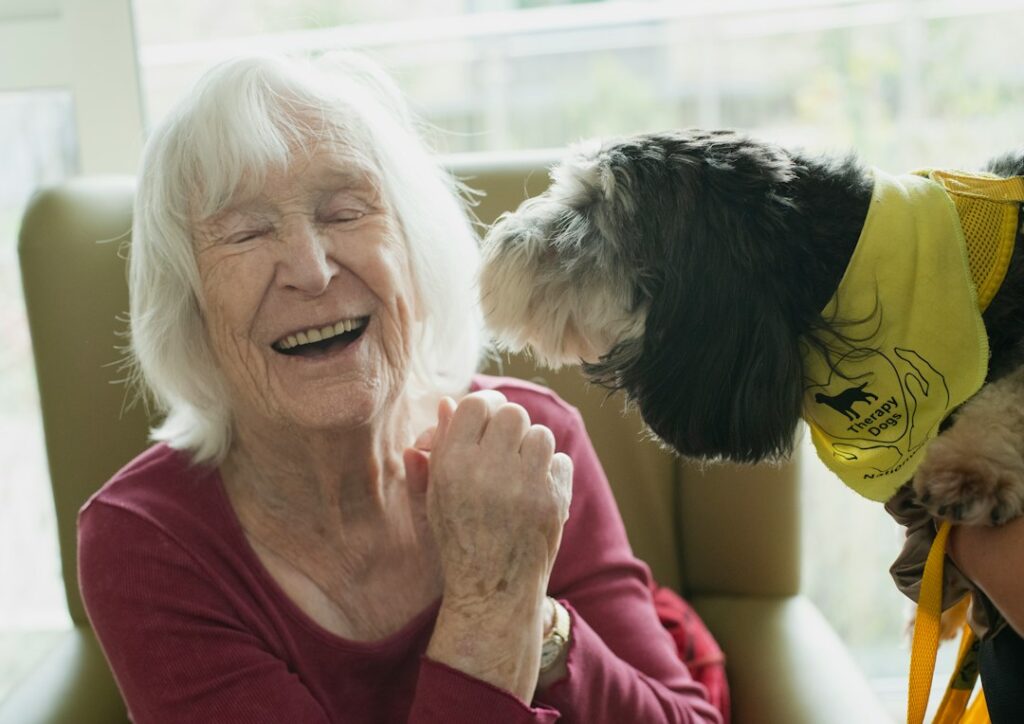
Moving into assisted living does not always mean giving up a beloved cat, dog, bird, or other companion animal. In Doylestown, PA, pet policies vary by residence, and approval usually depends on the animal’s health, temperament, care needs, and effect on other residents.
A residence may welcome personal pets, allow only certain types of animals, or permit pets under specific conditions. The most reliable answer is found in the residence’s written rules and resident agreement—not in a general statement that the community is “pet-friendly.”
Are pets allowed in Pennsylvania assisted living residences?
Usually, the answer depends on the individual residence. Pennsylvania rules require an assisted living residence to state in its written rules whether pets are permitted on the premises. The residence must also disclose to applicants whether pets are allowed and whether animals are already present.
This means a prospective resident should receive a clear answer before moving in. Policies may apply differently to:
- A resident’s personal pet
- An animal owned by a family member or visitor
- A shared community pet
- A therapy animal
- A disability-related assistance animal
A residence may permit pets but still limit where they may go, how they are cared for, or which animals are accepted.
What types of pets are commonly considered?
Cats and small dogs are often the animals most commonly discussed in assisted living policies, but some residences may also consider birds, fish, or other small caged animals. There is no single statewide list of animals that every residence must accept.
The written policy may address:
- The animal’s size, breed, or weight
- The number of pets allowed
- Whether the pet must live in a private unit
- Whether cages, tanks, or litter boxes are permitted
- Whether animals may enter dining rooms or activity areas
- Noise, odor, shedding, or behavior concerns
- Requirements for leashes, carriers, or outdoor supervision
A large dog may be manageable in one setting but unsuitable in another because of building layout, elevator use, outdoor access, or the availability of safe walking areas.
What health and vaccination requirements apply?
Pennsylvania assisted living rules require cats and dogs present at the residence to have a current rabies vaccination. The residence must keep a current rabies certificate from a licensed veterinarian.
Pets that are accessible to residents must also be in good health and nonaggressive. In practice, a residence may request additional information about:
- Routine vaccinations
- Parasite prevention
- Recent veterinary examinations
- Medical conditions that affect behavior or mobility
- History of biting, scratching, or threatening behavior
- Ability to tolerate indoor living and unfamiliar people
A pet does not have to be young or perfectly healthy to be considered. However, the residence must be able to manage health and safety concerns without placing unreasonable responsibility on staff or other residents.
Who is responsible for daily pet care?
Residents should assume that staff members are not automatically responsible for feeding, walking, grooming, cleaning, transporting, or arranging veterinary care for a personal pet.
A residence may require a written care plan identifying who will handle these tasks. That person could be a family member, friend, private caregiver, or another designated support person, depending on the residence’s rules.
Questions to clarify include:
- Who feeds the animal if the resident is ill or hospitalized?
- Who changes litter, cleans accidents, or removes waste?
- Who walks the dog during bad weather?
- Who provides transportation to a veterinarian?
- Who pays for food, grooming, medication, and emergency treatment?
- What happens if the resident can no longer care for the pet?
- Is there a backup person if the primary caregiver is unavailable?
This planning matters in Doylestown, where winter cold, snow, ice, and wet conditions can make outdoor walking difficult for older adults. Summer heat and thunderstorms may create additional challenges for dogs and for residents with limited mobility.
Can assisted living staff help with a pet?
Sometimes, but assistance should never be assumed. Staff may occasionally provide limited help as part of an individualized service arrangement, but personal care services for the resident are different from ongoing animal care.
A resident’s assessment may identify tasks the person can perform independently and tasks requiring support. That assessment does not necessarily mean the residence will provide pet care. Any arrangement should be written clearly, including what staff will do, what they will not do, and whether additional charges apply.
If a resident’s health or memory changes, the pet-care plan may need to be revised. A dog that was manageable when the resident could walk independently may become difficult to care for after a fall, hospitalization, or change in cognition.
Are there extra fees for keeping a pet?
Some residences charge additional fees, deposits, or other amounts for pets. Pennsylvania rules require pet-related charges to be included in the resident-residence contract.
Before signing, review whether the agreement addresses:

- A one-time pet deposit
- Monthly pet charges
- Cleaning or damage fees
- Veterinary or emergency costs
- Replacement of damaged flooring or furnishings
- Rules for ending the pet arrangement
A verbal assurance that “there may be a small fee” is not enough. The amount, purpose, and circumstances should be stated in the contract or an attached policy.
What about allergies, fear, and other residents’ rights?
A pet policy must account for the entire residential community. Other residents may have allergies, asthma, phobias, cultural concerns, or medical conditions affected by animals. Some people may enjoy visiting a pet but not want one near their room or dining table.
Reasonable policies may restrict animals from:
- Dining rooms during meals
- Kitchens and food-service areas
- Medication areas
- Certain activity rooms
- Residents’ rooms when those residents do not want animals present
- Areas where an animal could create a fall, sanitation, or infection-control risk
A pet owner may also be required to keep the animal under control, prevent jumping or pulling, clean up waste promptly, and avoid allowing the pet to roam in shared spaces.
Are service animals treated the same as personal pets?
Not necessarily. Disability-related assistance animals may be subject to separate legal protections and should be evaluated individually. A residence may still ask appropriate questions, establish health and safety procedures, and require the animal to remain under control.
A service animal is not simply a pet chosen for companionship. Its role, documentation requirements, access rights, and care responsibilities may differ from those involving a personal household animal. Residents should ask for the residence’s policy in writing and explain the animal’s function before admission.
What should a resident ask before moving in?
A short written checklist can prevent misunderstandings. Ask:
- Are personal pets permitted?
- Which species, sizes, and breeds are accepted?
- Must the animal remain in the resident’s private unit?
- Can the pet enter outdoor areas and common rooms?
- Who is responsible for daily care?
- What happens during illness, hospitalization, or an emergency?
- Are vaccination records required?
- Are there fees or deposits?
- What conduct could result in removal of the animal?
- Does the policy address service or assistance animals separately?
Pet ownership can support routine, companionship, activity, and emotional well-being, but it also requires a realistic plan. The right arrangement is one that protects the resident, the animal, staff members, and neighbors while making responsibilities clear before move-in.
